
Wi-Fi development board based on ESP-8266EX, Arduino-compatible with OTA wireless upload, featuring 11 I/O pins, one ADC pin, and an onboard 5V 1A switching power supply for projects requiring network connectivity.


Wi-Fi development board based on ESP-8266EX, Arduino-compatible with OTA wireless upload, featuring 11 I/O pins, one ADC pin, and an onboard 5V 1A switching power supply for projects requiring network connectivity.
Arduino-Compatible Wi-Fi Development Board Based on ESP-8266EX with OTA Upload
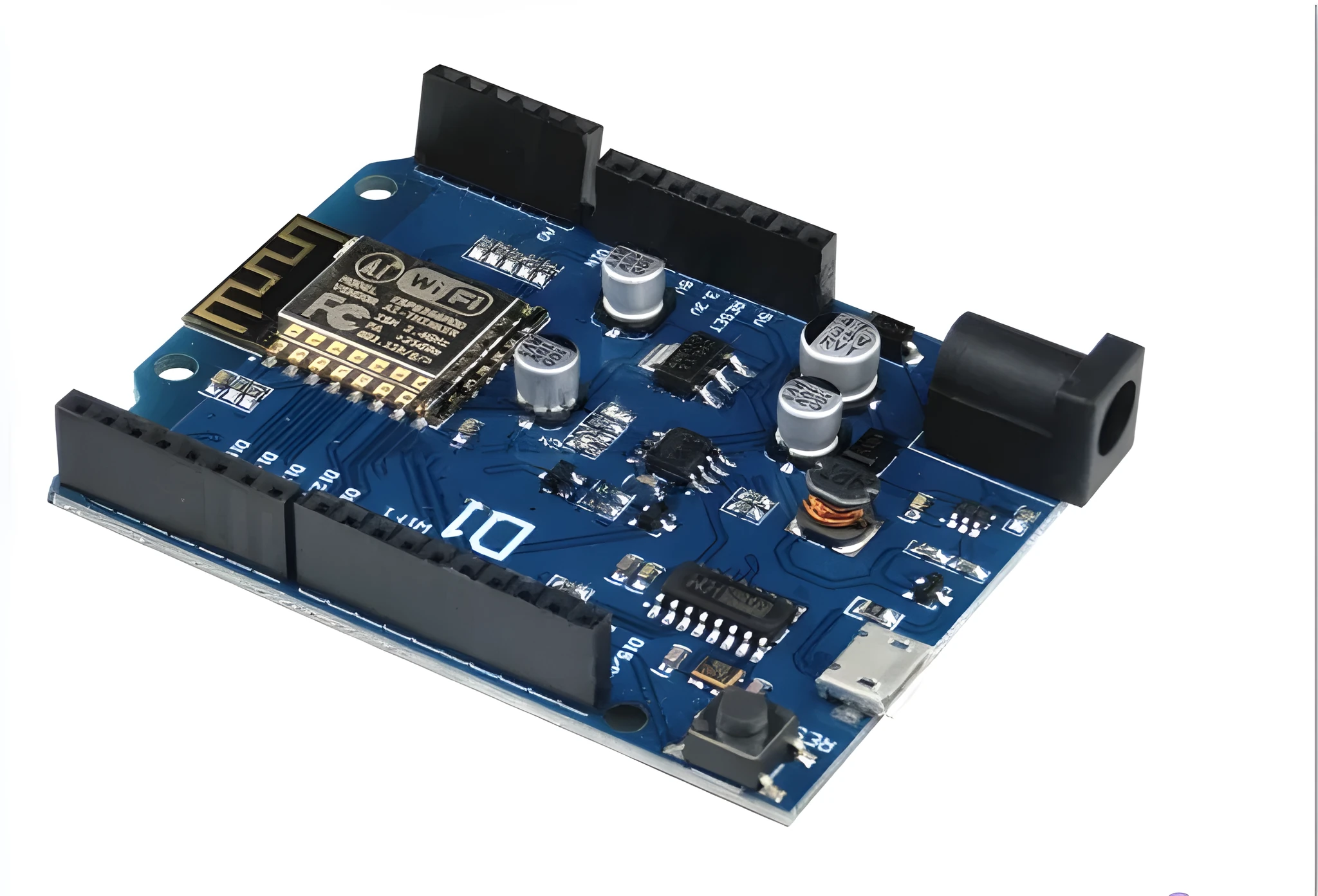
This development board centres on the popular ESP-8266EX module, providing a straightforward platform for adding Wi-Fi connectivity to electronics projects. Its primary advantage is full compatibility with the Arduino Integrated Development Environment (IDE). Once the specific hardware package is installed, it can be programmed and used much like a standard Arduino UNO board, significantly lowering the barrier to entry for creating Internet of Things (IoT) prototypes, smart home devices, or network-connected data loggers. The inclusion of Over-the-Air (OTA) wireless upload capability further enhances its utility by allowing you to update the device's firmware remotely without needing a physical USB connection, ideal for deployed projects.
Features and Construction

The board's design focuses on practical functionality for developers and hobbyists. It integrates the necessary components to start prototyping with Wi-Fi without requiring extensive additional circuitry.
Material and Build
The board is built around the ESP-8266EX system-on-a-chip, which handles the Wi-Fi networking stack and provides general-purpose processing power. This is combined with standard printed circuit board (PCB) construction featuring pin headers for easy connection to breadboards or other components. An onboard switching mode power supply regulates incoming power to a stable 5V at 1A, capable of accepting a wide input voltage range up to 24V, which offers flexibility when using different wall adapters or battery packs.
Size and Practical Fit
While exact physical dimensions are not specified, the board follows a typical development board form factor designed for use on a benchtop or within a prototype enclosure. The 11 digital I/O pins and single ADC pin are arranged for accessible wiring. The ADC pin's defined input range of 0-3.3V is important for correctly interfacing with analogue sensors and ensuring readings are within the safe operating voltage of the board's circuitry.
Uses and Placement
This board is suited for a variety of applications where adding network connectivity is a key requirement. Its Arduino compatibility makes it a versatile tool for both educational and professional prototyping environments.
Event or Professional Use
In professional or exhibition settings, the board can be used to build remote monitoring systems, interactive displays, or wireless sensor nodes that report data to a central server. The OTA feature is particularly valuable here, as it allows for bug fixes or feature updates to be deployed across multiple installed units without physical access, reducing maintenance downtime and costs.
Everyday Home Use
For home enthusiasts, it's an accessible entry point for DIY smart home projects. You could use it to create a wireless temperature and humidity monitor for a greenhouse, a smart LED light controller, or a sensor that notifies you when a mailbox is opened. The familiar Arduino workflow means a vast library of existing code examples and community support can be leveraged directly.
Benefits and Buying Value
The value of this board lies in its integrated, ready-to-use approach to Wi-Fi development, combining several key components into a single, programmable unit.
Reuse and Low Maintenance
The board is designed for reuse across multiple projects. Its general-purpose I/O pins and standardised programming method mean it can be reprogrammed endlessly for different applications. The robust onboard power supply helps protect the board from voltage fluctuations, contributing to its longevity in prototyping scenarios where power sources might change.
Why Choose This Product
This board stands out for its specific combination of the ESP-8266EX Wi-Fi module with full Arduino IDE support and built-in OTA functionality. Compared to sourcing a bare ESP module and designing a power circuit separately, this integrated board saves time and reduces complexity, allowing you to focus on writing code and building your application rather than on foundational electronics. It provides a complete, tested platform for networked prototyping.